Lessons From Death Row Inmates
I was immediately drawn to the title. What lessons could we possibly learn from death row inmates? Don’t kill people? I learned that in preschool. In addition to the title, the debate over the death sentence has always interested me. I have a pretty strong opposition to it, but I think that both sides of the argument are fascinating, and have their own strengths. Also, the death penalty is largely debated through ethics, which is the same lens through which we commonly look at cloning. The tone of the title seemed like it could fall either way- either for or against the death penalty- so I went ahead and clicked on it. Almost before I realized it, the eighteen minutes were over (and I had to get out of my bed and actually write this post).
This TED talk was given by Mr. David R. Dow, who has been a death row lawyer in Texas for over twenty years. As soon as he began to talk about the execution of his clients, it became clear which side of the argument he was on. Despite his evident bias however, Dow swore that he was going to talk about the death penalty in a way that was entirely uncontroversial. He said that everybody, no matter which side of the argument they were on, could agree on one thing; that the murder of an innocent human being (by the future death row inmate) was simply not right. What’s more, Dow said that three out of four times, these murders were preventable. He explained that there were countless times that someone could have intervened in the life of a death row inmate before he reached the execution table. Not only after the crime was committed, but long before it was even thought of. Most of these death row inmates came from dysfunctional homes. We could have intervened then. Most of these inmates were former juvenile delinquents. We could have intervened then. But we didn’t. We did not choose to intervene until after a serious crime was committed. Mr. Dow gave his talk in order to both allow people to realize and encourage them to fight for one thing: we can prevent the murder of innocent people easily, should we just take steps to help those in need.
Throughout his speech, Dow tried multiple tactics in order to achieve his objective (can you tell I’m a theatre kid?).These tactics, of course, included ethos, pathos, and logos. Dow began his speech by talking about a past client of his named Will. Will’s story is where we see most of our pathos. He grew up with a single mother, as his father left when his mother was pregnant with him. Dow explains that this would have been fine, except for the fact that his mother was a “paranoid schizophrenic”. When Will was just five years old, his mother chased him around the house with a butcher’s knife, threatening to kill him. She was eventually taken away by the authorities and placed in a psychiatric hospital, after Will locked himself in the bathroom, screaming for help. Will then went to live with his older brother, until he committed suicide by shooting himself through the heart. Will then bounced around from family member to family member until he found himself essentially living by himself at the age of nine. Will went on to join a gang, and eventually commit murder, for which he was executed. When we are presented with this tragic story, we almost immediately empathize with Will. The use of this pathos is clever, as it not only causes us to feel for Will, but also ask the essential question of why nothing was done to prevent Will’s tragic story sooner. This of course, is exactly what Dow is trying to get us to ask.
Part of the reason Dow’s speech is so successful is due to his ability to not only make incredible emotional sense, but perfect logic sense as well. He explains that one of the reasons people are often so hesitant to intervene is money. However, he then tells us that for every 15,000 dollars we spend “intervening in the lives of economically and otherwise disadvantaged kids” in earlier chapters, we save 80,000 dollars later in crime related costs. Dow explains that even if we don’t sympathize with the emotional part of his argument, there are practical, monetary reasons to intervene in the lives of these kids. Dow also states that three out of every four homicides (all four of which will have happened by the time his audience has left the room) can be prevented by this intervention, which is an incredibly powerful statistic.
Finally, we have to look at Mr. Dow’s credibility. Evidently, as he is a lawyer for death row inmates, he is not in favor of the death penalty. Although he claims to be providing an argument for which both sides are in favor, his bias may cause him to ignore or disregard facts against helping disadvantaged kids. However, since he has been a death row lawyer for so long, he is very well versed on the topic, and has witnessed enough cases to draw reasonable conclusions regarding the death penalty. Finally, Mr. Dow is from Texas. While this may not seem like anything extraordinary, Texas has one of the largest pro-death penalty populations in the United States (everything’s bigger in Texas, right?). Since Mr. Dow has been representing clients in the state of Texas for so long, he must be well accustomed to the opposing side of the argument. It is incredibly difficult to be unaware of something that is so strongly present in your life. Therefore, we can conclude that Mr. Dow has had the opportunity to both weigh and experience the two different sides of the argument, and come up with an argument that both sides truly agree on.
Overall, I thought that Mr. Dow’s speech was very powerful, and not just because we share some of the same beliefs. I believe that an argument is always stronger should you be able to address emotion and logic, and the fact that he is a credible source makes it even more successful. I thoroughly enjoyed Mr. Dow’s speech, and found it to be incredibly relevant to our current reading material. Mr. Dow, if you’re out there, well done.
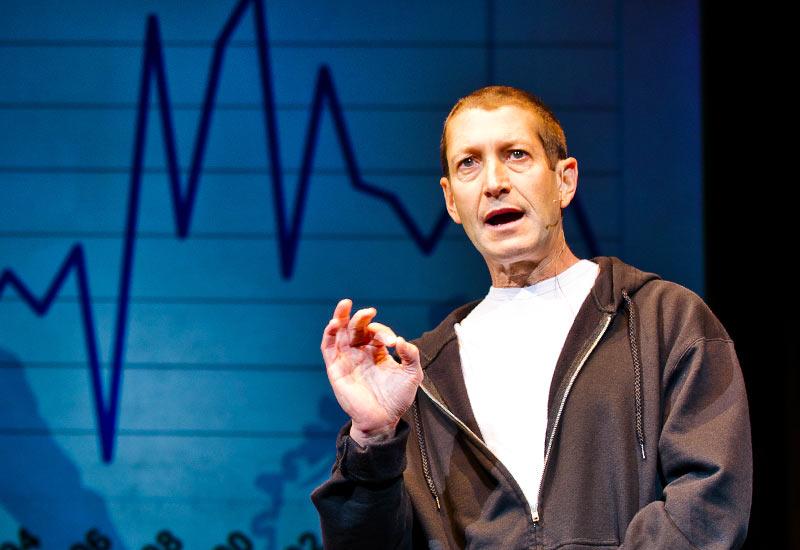
Mr. Dow, giving his TED talk.

Hey Lily! I thought your analysis did a good job of balancing the pathos, ethos, and logos of the death row TED talk. Your personality shown through the post, which made it a lot easier to read than the others. I also liked how you evaluated the speaker's bias when determining the validity of his argument. I am also against the death penalty, so I appreciated reading an in-depth look at the issue. The only criticism I have is that the text is messed up where you have to keep scrolling horizontally to keep reading. Overall good job!
ReplyDeleteLily, great blog post overall. I think you presented your Logos, Ethos, and Pathos well and it didn't feel forced. I also appreciated the way you acknowledged both yours and the speaker's biases before getting into the meat of the post. Your eventual show of how you felt about the quality of the talk was a nice addition too. I do have 2 criticisms. Your quotation of "paranoid schizophrenia" seemed a little odd. Also, the way you wrote the sentence about Will's brother committing suicide made it sound like Will was the one who had shot himself. In the end, I'm being picky and your blog post was great!
ReplyDelete